
Slender Man was created by Eric Knudsen, posting under the alias Victor Surge, on June 10, 2009, as a fictional entry in a Photoshop contest on the Something Awful forums. What started as two doctored photographs with eerie captions exploded into one of the most studied examples of internet folklore ever documented. Unlike most legends, Slender Man has a verifiable birth certificate, and that fact alone makes the story worth telling.
TL;DR:
- Slender Man was created on June 10, 2009, by Eric Knudsen as a fake paranormal artifact in a forum Photoshop contest, making its origin verifiable.
- The myth rapidly expanded through creepypasta wikis, YouTube series like Marble Hornets, and fan contributions, creating a decentralized folklore ecosystem.
- The character's design borrows horror cues from Lovecraft, shadow figures, and occult figures, with a featureless face and tall, thin silhouette that evokes familiarity and unease.
- Scholars classify Slender Man as an open-source monster, built through participatory "legend engineering" that combines fake evidence and community-driven storytelling.
- The Waukesha stabbing in 2014, linked by the perpetrators to Slender Man, shifted public perception, highlighting issues of online content influence and the importance of context.
Table of Contents
- 1. The Something Awful post that started it all
- 2. How the myth spread across creepypasta wikis, Marble Hornets, and YouTube
- 3. Design and influences that shaped Slender Man's uncanny look
- 4. Why scholars call Slender Man an open-source monster
- 5. The Waukesha stabbing and the moral panic that followed
- 6. Films, games, and fan culture built around the legend
- 7. What creators can learn from a myth that outgrew its author
- 8. Timeline: how the legend grew between 2009 and 2014
- 9. Why Slender Man still unsettles people more than a decade later
- 10. How Slender Man reshaped internet horror and the memes that followed
- What the Slender Man story actually proves about modern horror
- Where to read more modern creepypasta fiction
- FAQ
- Sources
1. The Something Awful post that started it all
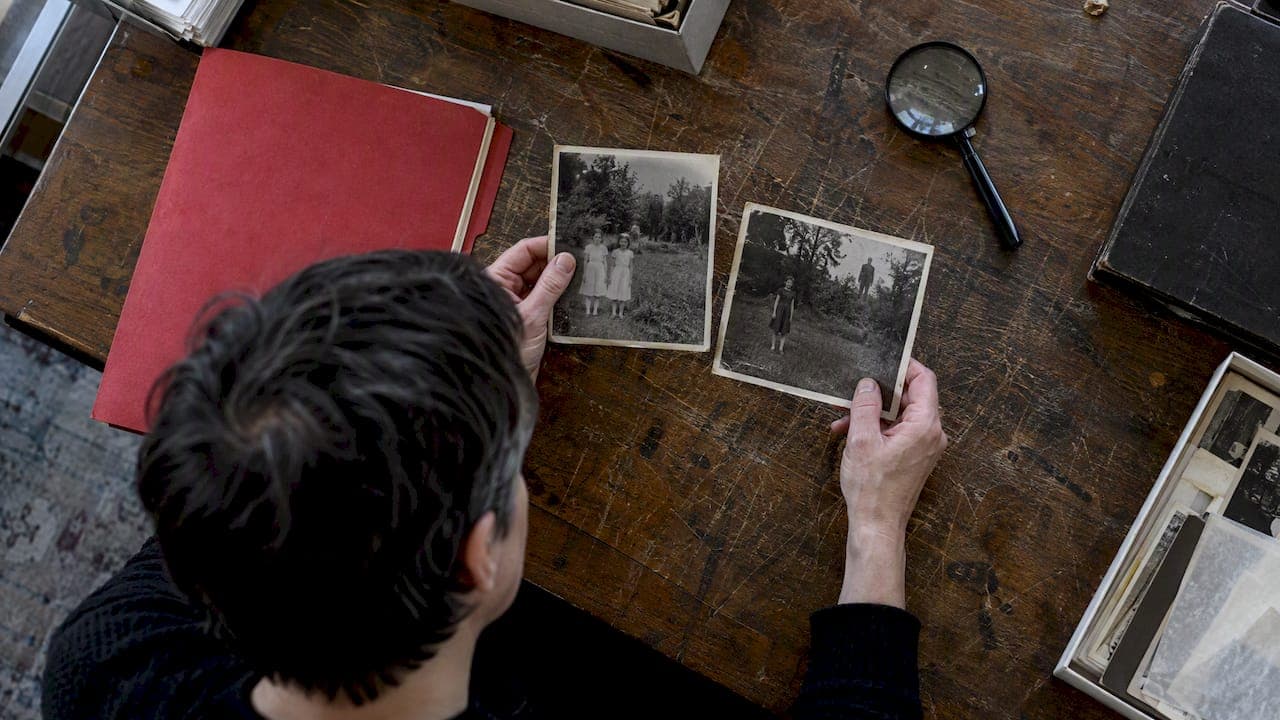
The Something Awful forums hosted a thread challenging members to create convincing "paranormal" images, the kind of fake evidence that could pass as a genuine ghost photo or cryptid sighting if you didn't look too closely. Eric Knudsen, posting under the handle Victor Surge, answered the call with two black-and-white photographs showing children at play, with a tall, impossibly thin figure lurking in the background of each. Short captions, written in the clipped tone of a witness statement or incident report, implied the children had vanished shortly after the photos were taken.
That framing mattered. Knudsen didn't write a short story or post a drawing. He built an artifact that looked like it came from somewhere else, a case file, a found photo, a piece of evidence rather than fiction. Readers encountering the images outside the thread's original context had no obvious signal that they were looking at a joke entry in a forum contest.
Knudsen later described his influences in public comments, naming inspirations that helped the figure feel both familiar and wrong. According to the Wikipedia entry on Slender Man, he cited Stephen King's The Mist, the Tall Man from the 1979 film Phantasm, and reports of so-called shadow people as touchstones for the character's mood and silhouette. His intent was to produce an unsettling image, not to claim any of it was real.
What makes this origin unusual is how little guesswork is required. Most folklore develops across decades or centuries, passed between communities with no single author and no fixed starting point. Slender Man has:
- A named creator (Eric Knudsen)
- A specific date (June 10, 2009)
- An original platform (the Something Awful forums)
- The original images and captions, still referenced by researchers today
That paper trail is why scholars treat Slender Man less as a traditional legend and more as a case study in how legends can now be manufactured, tracked, and studied in real time.
2. How the myth spread across creepypasta wikis, Marble Hornets, and YouTube
A forum post alone doesn't become a cultural phenomenon. What turned Slender Man from a clever contest entry into a sprawling mythos was the speed and creativity with which other people picked it up and ran with it. Within weeks, the images had been reposted to creepypasta wikis and imageboards, stripped of their original context and recirculated as if they were standalone evidence.
The single biggest accelerant was a YouTube series called Marble Hornets, launched not long after Knudsen's original post. The series adopted a found-footage format, shaky handheld video, static-laced tapes, a sense that the viewer was watching surveillance rather than fiction, and introduced an alternate name for the figure: The Operator. This aesthetic choice gave the mythos something it previously lacked: a consistent visual grammar that other creators could copy.
The spread followed a few distinct patterns:
- Creepypasta wiki contributors added new "sightings," backstories, and regional variants, turning a single image into a shared universe.
- Indie game developers built playable experiences around the character, letting players experience stalking and pursuit firsthand rather than just reading about it.
- Fan artists and fiction writers filled in gaps the original post never addressed, like motive, origin, and method.
- ARG-style projects layered in fake documents, cryptic clues, and interactive elements that blurred the line between story and game.
Each of these contributions added texture without any central authority approving or rejecting them. Nobody owned Slender Man the way a studio owns a franchise character, which meant anyone could extend the mythos as long as their addition felt consistent with what had come before.
3. Design and influences that shaped Slender Man's uncanny look
Slender Man's design works because it borrows familiar horror signals and strips away the details that usually make a monster easy to categorize. The tall, thin frame in a black suit evokes a mourner or a businessman, something that should belong in ordinary life. The featureless face removes any possibility of reading intent or emotion, which is often more unsettling than an aggressive expression would be. Tentacle-like limbs, appearing in some depictions, push the figure further from human without making it obviously animal or supernatural in a recognizable way.
Creators and scholars have traced several precedents behind this look:
- H. P. Lovecraft's fiction, with its emphasis on indescribable, unknowable entities
- The Tall Man from Phantasm, a silent, looming figure in formal dark clothing
- Reports of "shadow people," a recurring motif in paranormal folklore involving tall, dark humanoid figures glimpsed at the edge of vision
- Survival-horror video games, which trained audiences to associate silent pursuit with dread
What makes the character durable isn't any single influence but how recognizable they are in combination. Horror fans could sense echoes of Lovecraft, Phantasm, and urban paranormal lore without the figure feeling derivative of any one source, which made it easy to adopt and remix.
Pro Tip: When building a horror antagonist, withhold one sensory detail entirely (a face, a voice, a motive) and let audiences fill the gap themselves; what they imagine is almost always scarier than what you'd describe.
4. Why scholars call Slender Man an open-source monster
Academics studying digital culture have developed specific language for what happened after Knudsen's original post, and it goes well beyond "the meme went viral." Researchers describe Slender Man as an open-source monster, a figure whose core concept was deliberately left incomplete so that a decentralized community could build onto it the way developers contribute to open-source software.
Scholars frame Slender Man as a case of "reverse ostension" or "legend engineering," where participants intentionally create artifacts and fragments designed to simulate the markers of traditional, organically-grown folklore.
That framing comes from digital folklore scholarship published in the University of Florida Law Review, which treats the mythos as a textbook example of how the internet can produce a legend with a documented birth that nevertheless behaves like something ancient and authorless. Normally, ostension describes people acting out an existing legend, treating a story as though it were real. Reverse ostension flips that: creators fabricate the fragmentary evidence first (fake photos, invented witness accounts, grainy video) and let audiences assemble those pieces into something that feels like inherited lore rather than invention.
Separate research into the mythos, including analysis published through Bucknell's digital commons, describes this process as building a legend ecology: a network of interlocking artifacts, images, stories, videos, forum posts, that collectively generate the impression of a tradition with history behind it. The individual pieces don't need to be consistent or even plausible. What matters is volume and the appearance of independent corroboration.
Key takeaways from this research:
- Participatory authorship replaces the single-author model most fiction relies on.
- Simulated authenticity (fake photos, fragmented accounts) does more work than polished writing.
- Audiences often know the material is fictional and participate anyway, which separates this from a hoax in the traditional sense.
5. The Waukesha stabbing and the moral panic that followed
Slender Man's reputation changed sharply after May 2014, when a stabbing in Waukesha, Wisconsin, drew national attention to the mythos in a way its creators never intended. Two 12-year-old girls were accused of attacking a classmate, and reporting at the time connected their stated motive to a belief in Slender Man as a real figure they felt compelled to appease. The case led to extended legal and psychiatric proceedings and became a fixture in national news coverage for months afterward.
The incident reshaped public conversation in several ways:
- News outlets used the case to raise broader questions about children's access to disturbing online content.
- Commentators debated how much responsibility, if any, falls on creators of fictional horror shared online.
- Mental health professionals and legal analysts pushed back against simple narratives, pointing out that the case involved serious underlying psychiatric factors that complicate any claim that a fictional character alone caused the attack.
Fiction, clearly documented: Slender Man has a verifiable, fully fictional origin traceable to a specific forum post in 2009, and no credible source treats the figure as anything other than an invented character, a point worth stating plainly given how often the mythos gets tangled up with claims of reality.
It's worth separating two different conversations that often get merged: whether fictional horror content can be genuinely unsettling (it can, and that's often the point), and whether a specific violent act can be attributed to a piece of fiction in any straightforward way. The Waukesha case prompted intense scrutiny of the second question, and most serious analysis, including coverage from outlets like BBC and NBC, treated the answer as far more complicated than headlines initially suggested.
6. Films, games, and fan culture built around the legend
Slender Man's reach across media formats is part of why the character outlasted most internet-born horror figures. Marble Hornets remains the most influential adaptation, having established the found-footage aesthetic and The Operator persona that shaped how countless later creators depicted the figure. Indie horror games built entire mechanics around stalking and evasion, letting players experience pursuit rather than just read about it, which introduced the character to audiences who might never have found the original forum thread. A mainstream film adaptation also attempted to bring the character to wider audiences, with mixed critical reception.
Fan culture filled in everything the official canon never provided:
- Original artwork depicting the figure in new settings and styles
- Cosplay at horror and gaming conventions
- Extended fan fiction exploring backstory and motive
- Unofficial merchandise sold through independent creators
Each adaptation tends to adjust some core element, motive, method of appearance, physical details, which keeps the mythos flexible enough that no single version feels definitive or exhausted.
7. What creators can learn from a myth that outgrew its author
As someone who writes horror fiction for a living, I find Slender Man's story useful precisely because it exposes the ethics most creators never have to think about. Knudsen made something meant to unsettle readers for an afternoon, and it became a shared mythology that reached readers far younger and far more impressionable than anyone could control once it left that original thread.
The lesson isn't to avoid ambiguity or shareability. It's to recognize that horror shared online travels without context, and context is often what separates a scary story from a dangerous misunderstanding. We think about that tension directly in our own creepypasta work, where internet horror's appeal comes from the same open, collaborative spirit that built Slender Man, handled with a clearer sense of where fiction ends.
8. Timeline: how the legend grew between 2009 and 2014
The years between Slender Man's creation and the Waukesha stabbing mark the character's most active period of development. June 2009 brought the original Something Awful post. Within the following months, the creepypasta community absorbed the images and began generating independent stories and sightings, while Marble Hornets launched on YouTube and introduced the found-footage format that would define the character's visual identity for years.
Between 2010 and 2013, the mythos diversified rapidly. Independent game developers released titles built around stalking and survival mechanics, fan wikis expanded with dozens of competing backstories, and the figure appeared across forums far removed from its Something Awful origins. By this point, most casual encounters with Slender Man happened through fan-made games and videos rather than the original photographs.
May 2014 marked a turning point that shifted public perception from curiosity to concern, following the Waukesha stabbing and the national coverage that followed. A film adaptation arrived several years later, by which point the character had already been thoroughly reshaped by a decade of fan contributions, making the movie just one version among many rather than a definitive take.
9. Why Slender Man still unsettles people more than a decade later
Part of Slender Man's staying power comes from how the design withholds information. A blank face offers no fear, anger, or intent to read, which forces the viewer's imagination to supply whatever feels most threatening to them personally. That's a different mechanism from a monster with claws or teeth, where the threat is explicit and, in a strange way, limited.
The figure's association with ordinary settings, suburban yards, wooded parks near schools, playgrounds, adds to the unease by suggesting danger can exist inside familiar spaces rather than some distant haunted location. Psychologically, this taps into a fear that's older than the internet: the idea that something wrong can be present in a place we've already decided is safe.
There's also the participatory element. Because so many people contributed sightings, stories, and alleged evidence, encountering Slender Man content often came with an implicit suggestion that other people had already found this convincing. That social dimension, the sense of a shared, half-believed secret, gave the mythos a pull that a single author's story could never replicate on its own.
10. How Slender Man reshaped internet horror and the memes that followed
Before Slender Man, internet horror mostly lived in isolated scary stories and chain emails. The mythos demonstrated that a decentralized community could build something closer to an ongoing universe, complete with recurring visual motifs, shared terminology, and cross-platform storytelling spanning text, video, and games.

That template influenced a wave of later internet horror projects, which borrowed the same core structure: an ambiguous central figure, fragmented "evidence," and an open invitation for anyone to contribute. Found-footage horror series on YouTube multiplied in the years following Marble Hornets, many explicitly modeling their pacing and visual style on what that series established. Creepypasta as a broader genre owes much of its structure, anonymous authorship, wiki-based archiving, reader-submitted expansions, to patterns Slender Man helped popularize at scale.
The character also shaped how later internet myths were discussed and debunked. Journalists and researchers covering subsequent viral horror content frequently referenced Slender Man as the baseline case, a shorthand for explaining how fictional content can acquire the trappings of belief without anyone involved being deliberately deceptive in the way a traditional hoax requires.
What the Slender Man story actually proves about modern horror
The conventional wisdom treats Slender Man as either a cautionary tale about internet danger or a quirky footnote in meme history. Both miss the more interesting point: this is the first widely documented case where we can watch a folkloric figure get built in real time, with every contributor's fingerprints still visible. That's a research opportunity most legends never offer.
Where I think commentary usually goes wrong is treating the Waukesha stabbing as proof that the mythos was inherently dangerous. The far more useful lesson is about context collapse: a character designed to unsettle a forum audience for an afternoon reached readers who had no framework for understanding it as fiction. That's a distribution problem, not a storytelling flaw.
If you take one thing from this history, let it be this: ambiguity is a powerful tool in horror precisely because readers fill gaps with their own fears. Use it deliberately, and be honest with your audience about where the fiction ends.
— Mark
Where to read more modern creepypasta fiction
If Slender Man's story has you curious about how internet horror works as a genre, we put together collections that explore exactly this kind of character-driven dread. Our Creepypasta: Origins collection features terrifying tales built around creepypasta favorites, and our Creepypasta Omnibus gathers one hundred and fifty stories in a single volume for readers who want to go deep.

- Creepypasta: Origins features terrifying tales built around familiar creepypasta characters.
- Creepypasta Omnibus One collects one hundred and fifty stories for readers who want extended reading.
- Browse the full Creepypasta Books collection to find the right starting point.
These are fiction collections, written for readers who already enjoy the genre Slender Man helped define. Explore the full Creepypasta series to find your next read.
FAQ
What is the real story behind Slender Man?
Slender Man began as a fictional entry by Eric Knudsen, posting as Victor Surge, in a Photoshop thread on the Something Awful forums on June 10, 2009. The "real story" is that a community of fans, artists, and writers expanded that single post into a sprawling, collaboratively built mythos over the following years.
How did Slender Man become faceless?
The featureless face was part of Knudsen's original design, intended to remove any readable emotion or intent from the figure. That blankness made the character easy for other creators to adapt, since nobody had to match a specific expression or personality when adding their own contributions.
When did Slender Man originate?
Slender Man originated on June 10, 2009, when Eric Knudsen posted two doctored photographs to a Something Awful forum thread. The character spread rapidly afterward through creepypasta wikis and the YouTube series Marble Hornets.
Is Slenderman pure, evil, or broken?
There's no single canonical answer, since Slender Man's motives and nature were never fixed by a central creator and have been reinterpreted differently across games, fan fiction, and video series. Some depictions frame the figure as a predatory force, while others lean into ambiguity, leaving intent deliberately unexplained.
Sources
- Slender Man — Wikipedia
- Digital folklore scholarship — University of Florida Law Review repository
- Tall, Dark, and Loathsome: The Development of a Legend Cycle in the Digital Age — Bucknell digital commons