
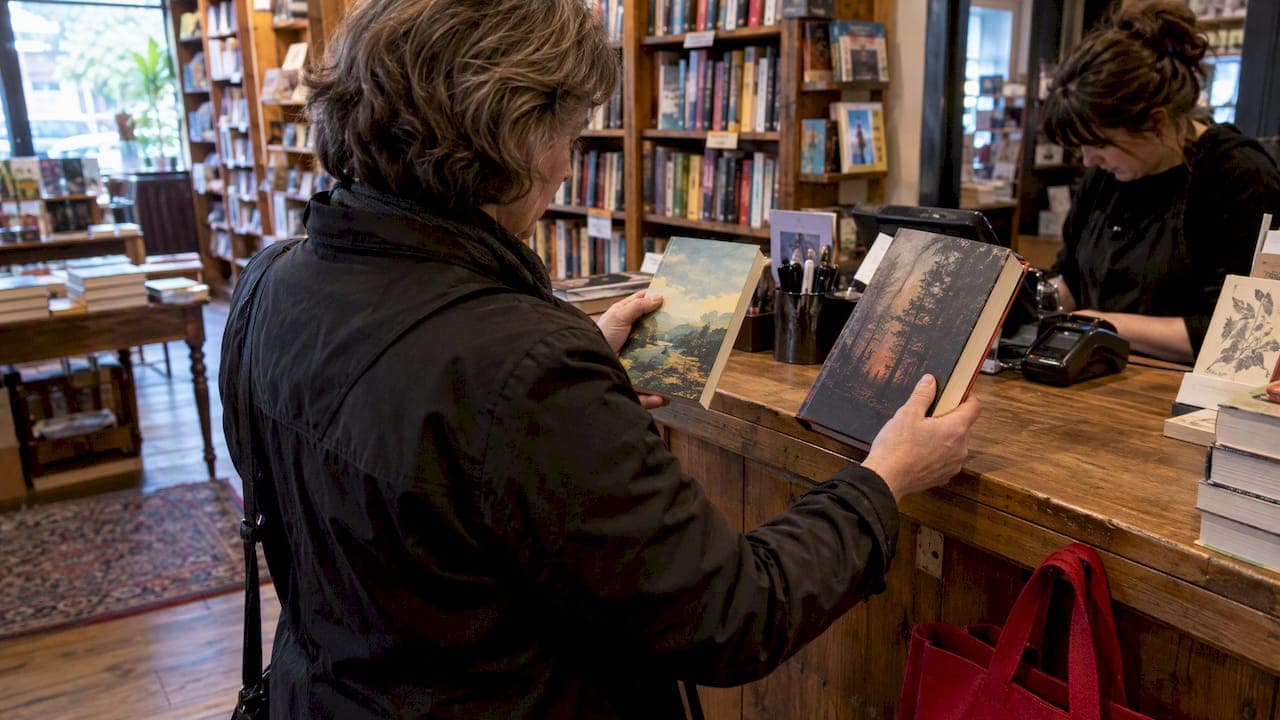
Choose paperback when you want portability and value. Choose hardcover when you want durability and a book that looks great on a shelf. Neither format wins every time: your budget, how roughly you handle books, and whether you're buying to read or to keep all shift the answer.
TL;DR:
- Paperbacks are lighter and more flexible, making them ideal for travel, commuting, and casual handling, especially in mass-market editions.
- Hardcovers offer stronger protection and a more attractive shelf presence, but their higher cost and weight are less justified for single-read books.
- Book longevity depends more on paper quality and binding type than cover material, with sewn bindings lasting longer than adhesive ones in paperbacks.
- Environmental impact favors paperbacks due to lower raw material use and weight, but sustainable sourcing and reuse are more important factors than cover type.
- Choosing between formats should be based on use case, with paperbacks best for portability and value, and hardcovers suited for display, gifting, and long-term durability.
Table of Contents
- Paperback vs hardcover at a glance
- Why readers choose paperbacks
- Why readers choose hardcovers
- How to decide which format fits you
- How long each format actually lasts
- Does your book format affect the planet?
- An author's take on paperback vs hardcover
- Where to find Mark Watson's books in both formats
- FAQ
- Sources
Paperback vs hardcover at a glance
Some differences jump out the moment you hold both formats side by side. Others only matter once you factor in price tags, shipping boxes, or that one shelf everyone wants to look nice.
- Portability: Paperbacks are lighter and flexible enough to fold into a bag; hardcovers add bulk and rigid corners that resist bending.
- Durability: Hardcovers protect pages with stiff boards, but library surveys show paperbacks hold up better in circulation than most readers expect.
- Cost: Paperbacks cost less to produce and ship; hardcovers run higher because of materials and finishing.
- Presentation: Hardcovers signal permanence and gift-worthiness, with dust jackets and embossed titles; paperbacks keep things casual.
- Release timing: Hardcovers often arrive first as the premium edition, with paperbacks following months later at a lower price point.
Inside the paperback category, trade paperbacks use heavier paper and larger trim sizes, while mass-market paperbacks are smaller, cheaper, and built for a quick read rather than long-term shelf life.
Why readers choose paperbacks
Paperbacks earn their popularity by solving a simple problem: you want to read without carrying extra weight or spending extra money. They slide into a jacket pocket, survive a spilled coffee better than your pride, and cost little enough that losing one on a train doesn't sting.
- Lower price per copy, especially for mass-market editions.
- Lighter weight, which makes them the obvious pick for commuting, travel, or reading in bed.
- Easy to replace, so a damaged or lost copy is not a financial setback.
- Flexible covers that tolerate being stuffed into a backpack without cracking.
The trade-off shows up in binding. Many paperbacks use adhesive (perfect) binding, where pages are glued rather than sewn into signatures. Sewn bindings, more common in trade paperbacks and nearly all hardcovers, open flatter and hold up longer under repeated handling. Adhesive binding has improved over the decades, but if you plan to read a book dozens of times, sewn construction still wins on longevity.
Pro Tip: If you're buying a paperback for frequent re-reading, check whether it's a trade edition with sewn binding before assuming all paperbacks age the same way.
For a daily commute, a travel read, or a book you expect to lend out and never see again, paperback is the sensible call.
Why readers choose hardcovers
Hardcovers exist for a different kind of reader: one who wants a book to last, to look good doing it, or to hand over as a gift that feels like an event. The rigid boards guard against bent corners and crushed spines, and a dust jacket adds a layer of protection you simply don't get with a soft cover.
- Stronger physical protection from rigid boards and sewn bindings.
- Shelf presence that makes a collection look intentional rather than accidental.
- Higher resale and gifting value, especially for first editions or signed copies.
- Better suited to books you'll flip through for reference rather than read start to finish.
That protection comes at a cost. Boards, dust jackets, and finishing touches like embossing or foil stamping all add production expense, which shows up in both the retail price and the shipping weight. For a novel you'll read once on vacation, a hardcover's extra heft and price rarely earn their keep. For a book you want on display, the math flips.
How to decide which format fits you
Running through a short checklist beats agonizing over "which is objectively better," because there isn't a universal answer. Purpose-led decisions outperform blanket quality rankings every time.
Start with intended use. A commute book, a gift, a reference text, and a collector's piece all point toward different formats before price even enters the conversation.
- Will you read this once or return to it repeatedly?
- Does it need to survive a bag, a beach, or a bathtub?
- Is this for you, or is it a gift someone will unwrap?
- Do you care about shelf display or resale value down the line?
- What's your budget, including shipping if you're ordering online?
- Would a signed or first-edition hardback matter to you as a collector?
If your answers lean toward portability, frequent handling, and tight budgets, paperback wins. If they lean toward permanence, display, or gifting, hardcover is worth the premium.
Pro Tip: Collectors chasing first editions should confirm printing details before buying; a true first print often carries more value than a later hardcover run of the same title.
How long each format actually lasts
The assumption that hardcovers automatically outlast paperbacks doesn't hold up as cleanly as most people think.
A University of Kansas condition survey found that paperbacks held up well in library circulation, with textblock condition often comparable to hardback collections. That finding matters for anyone assuming a soft cover means a short lifespan.
Paper quality plays a bigger role than cover type. Acid-free paper resists yellowing and brittleness regardless of binding, while narrow gutter margins can strain a spine every time the book is opened flat. Sewn bindings distribute that stress better than adhesive ones over years of use.
- Shelve books upright and snug enough to support the spine without crushing neighbors.
- Keep books out of direct sunlight, which fades covers and weakens paper fibers.
- Use a dust jacket or clear protective cover on hardbacks you want to preserve.
- Rebind a well-loved paperback once pages start separating from the spine.
For more shelving advice, Book-a-Holic's storage guide covers practical setup steps for a home library.
Does your book format affect the planet?
Paper production, printing, and shipping all carry an environmental cost, and book format changes how heavy that cost lands. Hardcovers use more raw material per copy: thicker boards, extra adhesive, and often a separate dust jacket on top of the printed pages. That added bulk also means heavier shipping cartons, which translates into more fuel burned per copy moved from warehouse to doorstep.
Paperbacks, by contrast, use less material and weigh less in transit, so a given shipment of paperbacks typically has a smaller footprint than the same number of hardcovers. None of this means paperbacks are automatically the "green" choice in every case. A hardcover built to last decades on a shelf can, in theory, offset its heavier production by never needing replacement, while a paperback that falls apart after one read and gets discarded doesn't get much credit for being lightweight.

The most meaningful environmental factor isn't cover type at all: it's whether the paper comes from responsibly managed forests and whether the book stays in use rather than ending up in a landfill after one read. Buying secondhand, borrowing from a library, or simply holding onto books longer does more for sustainability than picking one cover material over another.
An author's take on paperback vs hardcover
The author tends to favor paperback for Creepypasta anthologies that readers might finish in one sitting and reserves hardcover for children's titles designed to endure repeated readings. Converting a paperback layout to hardcover isn't a simple cover swap: trim size, margins, and sometimes the ISBN itself change, which means replanning the interior design before the presses run. Buyers chasing signed copies should ask which edition and print run a signature belongs to, since that detail affects long-term value.
— Mark
Where to find Mark Watson's books in both formats
Browsing Mark Watson's catalog means wading through horror, children's stories, and internet horror anthologies, each suited to different readers and different shelves. The Horror and Creepypasta Books collections lean toward paperback and ebook editions built for fast, immersive reading, while Children's Books titles suit sturdier formats that survive repeat readings. Science Fiction rounds out the catalog for readers chasing a different kind of thrill.

Check each title's product page for current format availability before you buy.
FAQ
Which is better, hardcover or paperback?
Neither format is universally better: paperback suits portability and value, while hardcover suits durability and display. The right choice depends on how you plan to use the book, not on cover type alone.
Why do people prefer hardcover over paperback?
Readers often choose hardcover for its sturdier protection, shelf presence, and gifting appeal, since boards, dust jackets, and finishing details make it feel like a more permanent object. It also tends to hold higher resale value for first editions or collectible titles.
Is it worth it to buy hardcover books?
Hardcover is worth it for books you'll reread, display, or give as gifts, where the added durability and presentation justify the higher price. For a single casual read, the extra cost and weight rarely pay off.
Which is more expensive, hardcover or paperback?
Hardcover is almost always pricier because materials like rigid boards and dust jackets raise production and shipping costs. Paperbacks stay cheaper to print and ship, which keeps their retail price lower.
Sources
- Paperback vs Hardcover: What's Best for Your Book?
- Paperbacks, Binding, and Library Preservation (Abbey Newsletter excerpt)
- Hardcover vs Paperback | The Difference Between Formats