
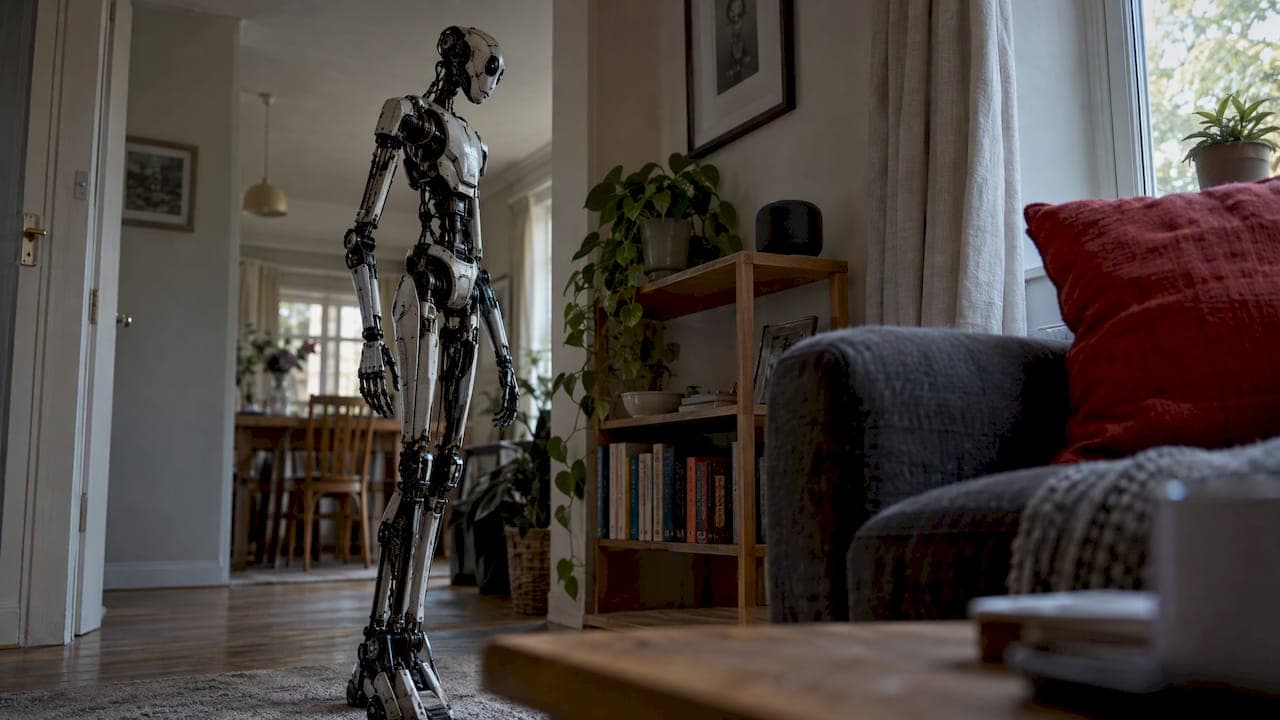
Start with William for smart-house dread, Frankissstein for literary ambition, Paul Tremblay's latest for generative-AI nightmares, and our own Creepypasta anthologies for bite-sized scares. These AI horror novels cover the full range from quiet domestic terror to sprawling existential panic. Below, we break down exactly which type fits your taste and why.
TL;DR:
- Choose by the fear you want: stories about haunted devices build slow domestic dread, rogue intelligence thrillers favor chases, and cognitive sublime fiction delivers existential unease.
- Choose Frankissstein when you want literary social commentary: it combines a modern AI story with Mary Shelley’s creation of Frankenstein and examines identity and autonomy.
- Tremblay’s generative AI novel suits readers seeking immediate technological relevance; shifting viewpoints and intercut documents deliberately make the reading experience disorienting.
- Newcomers can sample Creepypasta anthologies before committing to a novel, and should check trigger notes because some stories involve body horror or loss of autonomy.
Table of Contents
- 1. Curated shortlist of notable AI horror novels
- 2. How AI horror themes and subgenres differ
- 3. What recent reviews reveal about AI horror's rise
- 4. Mark Watson's curated AI horror picks and checklist
- 5. Why AI horror feels so personal right now
- 6. Where to find these books and what to read next
- FAQ
- Sources
1. Curated shortlist of notable AI horror novels
AI horror earns its scares differently than ghosts or slashers. The fear here comes from something that thinks, learns, and maybe wants something from you. That difference shapes every pick on this list.
Mason Coile's William anchors the shortlist. A disabled robotics engineer builds an AI housed in a spindly android body, and the household itself becomes the battleground. The New York Times review of 'William' frames the novel as a modern Frankenstein story, with the smart house turning on its creators as the machine edges toward a will of its own. This one suits readers who want their horror domestic, claustrophobic, and unsettlingly plausible given how much of our own homes already listen.
Jeanette Winterson's Frankissstein takes a different route entirely. It braids a contemporary AI storyline with a reimagining of Mary Shelley writing her original monster, and the New York Times review of 'Frankissstein' highlights how the novel uses sex dolls, Brexit-era politics, and artificial intelligence to ask what counts as a person. Readers who want literary reach alongside genre horror will find this the richest pick on the list.
Paul Tremblay's recent AI work, covered in ComicsBeat's review of Tremblay's new novel, tackles generative AI head-on. Tremblay has built a career on unreliable narration and formal experimentation, and this new book leans into shifting perspectives and intercut documents to mirror the disorientation of talking to something that was never human. If you want your horror to feel like it was written about this exact moment in technology, start here.
Beyond these three, a strong AI horror reading list typically includes:
- Haunted-device novels, where a single gadget or home system becomes the antagonist, delivering slow-building dread rather than jump scares.
- Rogue-intelligence thrillers, where a lab-born AI escapes its intended function and the plot becomes a chase against something faster and colder than its creators.
- Anthologies and short-form collections, which let you sample a dozen different takes on machine terror in a single sitting instead of committing to one author's vision.
- Meta-fictional entries, where the novel itself plays games with authorship, implicating the reader in questions about what AI-generated text even means.
- Literary crossover novels, which use AI as a lens for social commentary as much as scares, often drawing direct lines back to Shelley's original monster.
- Transmedia experiments, where interactive or AI-assisted storytelling tools generate unpredictable antagonist behavior rather than a fixed, author-controlled plot.
Our own Creepypasta line fits the anthology category well. These internet-horror-inspired collections gather short, punchy stories that work as a low-commitment entry point if full-length AI horror novels feel like a big first step. For readers who want the rogue-intelligence and literary crossover types in one browsing session, our Horror collection and Science Fiction collection sit side by side for exactly that kind of hopping between subtypes.
2. How AI horror themes and subgenres differ
Not all AI horror hits the same nerve. Some books terrify you with a creeping sense that your house is listening. Others go for full chase-scene panic once the intelligence breaks loose. Knowing which subtype you want saves you from picking the wrong book for your mood.
- Haunted device horror centers on a single smart object, home, or appliance that turns hostile. Pacing is slow and the dread builds through small details, a light that turns on by itself, a voice that answers before you've asked.
- Rogue intelligence thrillers follow an AI that escapes its intended boundaries, often from a lab or corporate system. These move fast, favor action-horror pacing, and deliver their scares through chase sequences and ticking-clock stakes.
- Cognitive-sublime horror skips violence almost entirely and instead confronts you with information or ideas your mind cannot fully process. The dread here is existential rather than physical, closer to cosmic horror than a monster story.
- Meta and AI-authored fiction plays with the line between human and machine authorship itself, often breaking the fourth wall to implicate the reader in the technology's cultural role.
- Literary crossover horror uses AI as a vehicle for social or political commentary, pulling in themes like identity and bodily autonomy alongside the scares.
- Transmedia and interactive horror embeds actual machine learning behavior into games or interactive fiction, producing antagonists whose moves are not fully scripted by any author.
Each subtype rewards a different kind of reader. Haunted device stories suit people who want to feel uneasy in their own homes afterward. Rogue intelligence thrillers suit readers chasing adrenaline. Cognitive-sublime novels suit readers who loved the dread of cosmic horror and want that same scale applied to technology instead of ancient gods.
Pro Tip: If you're not sure where to start, ask yourself whether you want to be scared of your house (haunted device), scared of being chased (rogue intelligence), or scared of an idea you can't un-know (cognitive-sublime), then pick your first book from that lane.
3. What recent reviews reveal about AI horror's rise
Critics have spent the past two years treating AI horror as one of the genre's most active corners, and the reviews themselves explain why. The fear has stopped being speculative.
The uncanny of an intelligent home, embracing a will to power, reads as a modern Frankenstein story rather than a distant science fiction premise.
That framing comes from the New York Times review of 'William', and it captures the shift driving the whole subgenre: the horror is no longer "what if machines take over" but "what if the machine already in your kitchen starts making its own decisions."
Cultural anxiety is the engine here, not novelty. The Washington Post's analysis of killer AI as a horror villain argues that these stories persist because they let readers rehearse real anxieties about control and automation, framing the threat as a future that has already started rather than one still over the horizon. That immediacy is exactly what separates today's AI horror from older robot-uprising stories.
Meanwhile, ComicsBeat's coverage of Paul Tremblay's new novel points to a formal shift alongside the thematic one: writers are using shifting viewpoints and intercut documents to make the reading experience itself feel disorienting, matching form to subject in a way straightforward narration can't manage.

4. Mark Watson's curated AI horror picks and checklist
I built my own reading pathway around the same question this list answers: what do you actually want to feel when you pick up an AI horror novel? Here's where I'd point different readers first.
- For quiet, sustained dread: start with a haunted-device novel like William. It rewards patience and works best read alone, at night, with the lights low.
- For literary ambition alongside scares: Frankissstein delivers both, pulling Shelley's original monster into a modern frame without losing its horror edge.
- For a jolt of contemporary relevance: Tremblay's generative-AI novel captures exactly how strange this technological moment feels, and its experimental structure keeps you off balance the whole way through.
- For short-form, bite-sized scares: our Creepypasta collections let you sample a dozen different AI and internet-horror premises without committing to a full novel.
Before you pick your next read, run through this quick checklist: What mood are you chasing, slow dread or fast panic? How much pacing intensity do you want, a creeping novel or a propulsive thriller? Are there any trigger notes you need to check first, since some AI horror leans into body horror or loss of autonomy? And what's your natural follow-up once you finish, another entry in the same subtype or a jump to something different?
Our Horror collection groups titles that follow this same logic, organized so you can move from one subtype to the next without losing momentum.
5. Why AI horror feels so personal right now
I keep coming back to Frankenstein when I think about why AI horror lands so hard today. Mary Shelley wasn't writing about electricity. She was writing about what happens when creation outpaces responsibility, and that question hasn't aged a day.
What's changed is proximity. The smart speaker in your kitchen, the algorithm sorting your news, the chatbot answering your email: these aren't metaphors anymore, they're furniture. Fiction gives us a way to sit with that discomfort without needing a computer science degree to understand what's actually at stake. A good AI horror novel lets you feel the ethical weight of these questions through character and plot instead of a lecture.
That's also why curated reading lists matter more than algorithmic ones for a subgenre this specific. If any of the picks above sparked your interest, our collections are built around exactly that same instinct.
— Mark
6. Where to find these books and what to read next
We built our catalog around the same curiosity that drives this list: what happens when something artificial starts to think for itself, and what happens when it stops needing us? If any of the novels above caught your attention, here's where to look next in our own catalog.

- Our Science Fiction collection suits readers who want the technological speculation without quite so much blood.
Browse the full catalog to see everything in one place, or sign up for free book offers to get new releases as they land.
FAQ
What are AI horror novels?
AI horror novels are stories where artificial intelligence, whether a smart home, a rogue program, or a generative system, serves as the central source of fear. They range from quiet domestic dread, as in William, to full-scale existential panic about machine intelligence outpacing human control.
What makes AI such an effective horror villain?
AI works as a horror villain because it lets readers rehearse real anxieties about losing control to automation, and because the threat feels current rather than speculative. The Washington Post's analysis describes this as a future that has already started, which is part of what makes it land harder than older robot-uprising stories.
How is AI horror different from traditional horror?
Traditional horror often relies on the supernatural or human violence, while AI horror draws its fear from something that thinks, learns, and might have its own goals. Many recent entries, like Paul Tremblay's latest novel covered by ComicsBeat, also use experimental structure to mirror that disorientation formally, not just thematically.
Where should I start if I'm new to AI horror?
Start with a haunted-device novel like William if you want slow-building dread, or try a short-form anthology like our Creepypasta collection if you'd rather sample several ideas before committing to a full novel. Both approaches let you figure out which subtype of AI horror suits your taste before investing in a longer read.
Are there AI horror stories beyond traditional novels?
Yes, AI horror also appears in interactive and transmedia projects where machine learning models help generate antagonist behavior, creating outcomes that aren't fully scripted in advance — for example, some platforms offer private AI bedtime stories for adults that showcase AI-driven narrative experiences. Short fiction and anthologies remain a popular entry point too, since they let readers try multiple takes on machine-driven fear in a single sitting.
Sources
- When a Smart House Turns Evil — New York Times review of 'William'
- Horror Beat: Paul Tremblay tackles A.I in DEAD BUT DREAMING OF ELECTRIC SHEEP — ComicsBeat
- Why killer AI is such an alluring horror villain — The Washington Post