
TL;DR:
- Horror in 2026 emphasizes environmental dread through liminal spaces and internet-inspired aesthetics. Horror-coated dramas are achieving huge success by blending emotional storytelling with genre elements. Digital culture and online communities now deeply influence horror's artistic and commercial growth.
Horror trends in 2026 are defined by one clear shift: the genre has stopped apologizing for itself. Liminal horror, horror-coated dramas, and existential storytelling are driving a box office surge that few predicted. Scream 7 opened to $64.1 million domestically and crossed $214 million worldwide, setting a franchise record. At the same time, low-budget films are grossing hundreds of millions by tapping into psychological dread rather than cheap scares. Digital culture, genre-literate audiences, and a new wave of risk-taking filmmakers are all pulling in the same direction. The result is the most exciting year for horror storytelling in at least a decade.
What are the dominant horror trends in 2026?
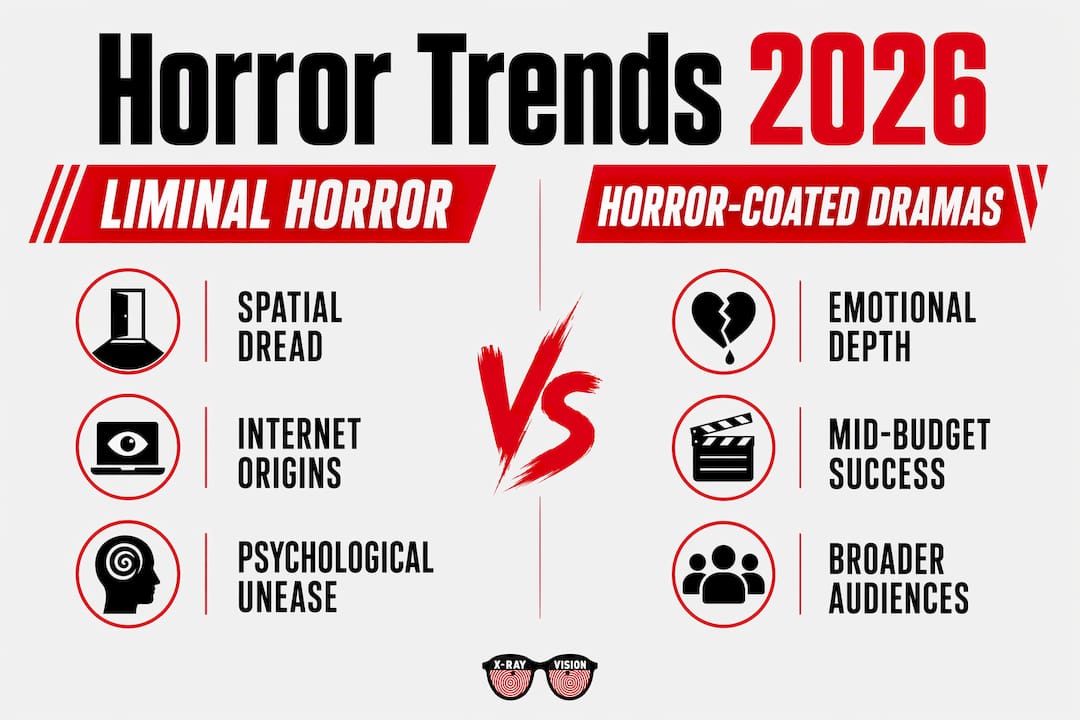
Liminal horror is the defining aesthetic of 2026. The term describes a specific kind of dread rooted in spatial anxiety: the fear of being trapped inside a system, a space, or a loop with no visible exit. There are no monsters in the traditional sense. The horror comes from the place itself.
The concept traces directly to internet culture. The Backrooms, a viral online phenomenon born from a single unsettling image of an empty office corridor, became the template. Yellow fluorescent lighting, stained carpet, the low hum of ventilation. The wrongness is architectural, not supernatural. That aesthetic has now crossed into mainstream cinema and literary horror.
Liminal spaces work because they tap into something most people have felt but never named. A hospital corridor at 3:00 AM. An empty shopping mall after closing. A school hallway during summer. These spaces feel wrong because they exist outside their intended purpose. Liminal horror evokes nostalgic yet eerie disorientation that unsettles viewers at a subconscious level, connecting fear to memory and identity rather than to a physical threat.
The Weirdcore aesthetic, another internet-born visual language, feeds into this same vein. Distorted childhood imagery, glitched textures, and dreamlike color palettes create a sense of wrongness that feels deeply personal. Horror creators have absorbed these online aesthetics and translated them into film and fiction with remarkable speed.
- Spatial anxiety replaces monster-driven fear with environmental dread
- Backrooms and Weirdcore aesthetics have moved from niche forums to theatrical releases
- Nostalgic distortion uses familiar spaces made strange to generate psychological unease
- No clear antagonist forces audiences to confront the setting itself as the source of threat
Pro Tip: If you want to understand liminal horror before watching the films, read the original Backrooms thread and study the Weirdcore tag on image boards. The aesthetic hits differently when you know its roots.
The cultural resonance of liminal horror is not accidental. It reflects a generation that grew up online, in spaces that felt both intimate and anonymous. The fear of being stuck in a system with no exit maps directly onto anxieties about work, identity, and digital life. Horror has always reflected the fears of its era. In 2026, those fears are architectural and existential.
How are horror-coated dramas reshaping mid-budget films?
Horror-coated dramas are the commercial story of 2026. The term describes films that use horror genre elements, such as dread, unsettling imagery, and psychological tension, as a vehicle for exploring deeply human emotional stories. The horror is the coating. The drama is the core.

Obsession grossed over $400 million worldwide on a budget of just $750,000. That ratio is extraordinary. It signals that audiences are hungry for horror that gives them something to feel beyond fear. The film works because it uses genre tension to explore grief, obsession, and the collapse of identity. The scares serve the story rather than interrupting it.
This format offers audiences an emotional buffer. Horror-coated dramas let viewers process heavy themes that would feel overwhelming in a straight drama. The genre wrapper creates distance. That distance makes difficult material bearable, even compelling.
| Film type | Budget range | Audience draw | Box office potential |
|---|---|---|---|
| Traditional slasher | $5M–$30M | Genre fans | Moderate |
| Horror-coated drama | Under $5M | Broad, including non-horror fans | Very high |
| Supernatural blockbuster | $30M+ | Wide release audiences | High with IP recognition |
Female audiences are a significant driver of this trend. Research consistently shows that women attend elevated horror at higher rates than traditional slashers. Horror-coated dramas deliver the emotional complexity and character depth that attract this audience. Studios have noticed. The mid-budget theatrical space, which many predicted would collapse entirely in the streaming era, is being rebuilt by this format.
Pro Tip: When a horror-coated drama gets strong word-of-mouth from non-horror fans, pay attention. That crossover signal almost always predicts a long theatrical run and strong streaming numbers.
The economic logic is hard to argue with. A $750,000 film that earns $400 million is not a fluke. It is a proof of concept. Expect the mid-budget horror-coated drama to become the dominant format for theatrical horror over the next two to three years.
Which filmmakers are driving the horror renaissance?
The 2026 horror renaissance belongs to a generation of filmmakers who grew up online and treat the genre as a legitimate artistic form. Industry analysts credit filmmakers prioritizing atmosphere and risk-taking with renewed audience engagement. These directors are not chasing jump scares. They are building dread through sound design, negative space, and narrative restraint.
Several patterns define this new wave:
- Atmosphere over action: Long takes, ambient sound, and minimal score create tension without relying on shock cuts
- Viral pre-release strategy: Short-form content on YouTube and TikTok builds dedicated fanbases before a film opens
- Festival legitimacy: Strong Rotten Tomatoes scores above 90% and festival selections signal that horror is now taken seriously by critics
- Collaborative networks: New directors mentor each other and share distribution strategies, creating a loose but effective creative community
Viral low-budget horror content translates into record-breaking opening weekends because the audience arrives already invested. The marketing happens organically through fan communities rather than through expensive traditional campaigns. This lowers costs and raises engagement simultaneously.
Horror's critical revitalization has encouraged filmmakers to take genuine creative risks. The genre's legitimacy is accelerating through festival acceptance and online community participation. A horror film with a 94% on Rotten Tomatoes no longer surprises anyone. That shift in perception has taken years to build, and 2026 is where it fully arrives.
How does digital culture shape modern horror storytelling?
Digital culture does not just influence how horror is marketed. It shapes what horror is about. The most resonant 2026 horror stories feel like they were born online because many of them were.
- Letterboxd and YouTube video essays have created a generation of genre-literate viewers who analyze films with the same rigor as academic critics. Platforms like Letterboxd foster sophisticated audience engagement that rewards complex, layered storytelling.
- Online horror aesthetics such as Backrooms, analog horror, and found-footage formats have migrated from niche communities to mainstream releases, bringing their dedicated audiences with them.
- Epistemic horror, a narrative technique where knowledge itself becomes the source of dread, is gaining traction. Epistemic horror makes audiences complicit in the dread by withholding and then slowly revealing information. The audience's growing understanding of what is happening is more frightening than any single reveal.
- Social media hype cycles compress the time between a film's festival premiere and its cultural saturation. A horror film can go from unknown to essential viewing in 72 hours if the right communities engage with it.
The social meaning of horror moments has become a genuine area of cultural analysis. Scenes from horror films circulate as memes, reaction videos, and discussion threads. This extends the life of a film far beyond its theatrical run and deepens audience investment in ways that traditional marketing never could.
Author Paul Tremblay captures another dimension of this shift. Modern existential horror synthesizes AI anxieties with dark humor, tapping into the primal fear of losing oneself. That combination of dread and absurdity feels native to the internet. It is the emotional register of a generation that has grown up watching the world become stranger and funnier and more frightening all at once.
What upcoming horror themes and genres should you expect?
The near-term forecast for horror is strong across multiple formats. Evil Dead Burn carries a predicted $30–$40 million domestic opening weekend, which reflects genuine confidence in supernatural horror's commercial pull. That kind of tracking number for a franchise entry signals that the audience is there and ready.
Beyond the established franchises, several growth areas are worth watching closely. Psychological horror that centers on identity collapse is gaining ground, particularly stories where the protagonist cannot trust their own perception. Existential horror blending AI fears with dark comedy, as Tremblay's work demonstrates, is moving from literary fiction into film. Supernatural horror with strong emotional cores continues to outperform pure shock-value entries.
New sub-genres are also emerging from indie and online creators. Analog horror, which mimics the visual grammar of old VHS recordings and public access television, has built a substantial online following. Slow-reveal narratives that unfold across multiple platforms, including YouTube series, Reddit threads, and short films, are creating immersive experiences that traditional cinema cannot replicate. These formats are training audiences to expect more from horror. When those audiences show up to theaters, they bring high standards with them.
The exciting new horror releases of 2026 reflect all of these currents. The genre is not moving in one direction. It is expanding in several directions simultaneously, which is exactly what a healthy creative form does.
Key Takeaways
Horror in 2026 is defined by liminal aesthetics, emotional storytelling, and digital-native audiences who demand more than cheap scares.
| Point | Details |
|---|---|
| Liminal horror dominates | Spatial anxiety and internet aesthetics like Backrooms have moved from niche forums to mainstream cinema. |
| Horror-coated dramas earn big | Low-budget emotional horror like Obsession proves the format can generate massive returns on minimal investment. |
| Digital culture shapes content | Platforms like Letterboxd and YouTube create genre-literate audiences who reward complex, layered storytelling. |
| New filmmakers lead the charge | Atmosphere-first directors using viral pre-release strategies are replacing traditional marketing with community engagement. |
| Existential themes are rising | AI anxieties, identity collapse, and dark humor are defining the next wave of horror storytelling. |
Why 2026 feels like a turning point for horror fans
I have followed horror closely for a long time, and I have watched the genre get dismissed, mocked, and underestimated in cycles. What feels different about 2026 is not just the box office numbers. It is the seriousness with which creators and audiences are approaching the genre.
The stigma is not fully gone, but it has cracked. When a horror film earns a 94% on Rotten Tomatoes and gets discussed in the same breath as prestige drama, something has genuinely shifted. The survival and existential themes that horror has always carried are finally being recognized as legitimate artistic territory.
What excites me most is the cross-pollination between literary horror and film. The aesthetics and narrative techniques that writers have been developing for years, epistemic dread, liminal atmosphere, existential humor, are now showing up on screen. That conversation between the page and the screen is making both forms richer.
If you are a horror fan, 2026 is not a year to sit out. The genre is producing work that will be talked about for decades. Pay attention to the small films, the online creators, and the writers who are pushing the form into uncomfortable new territory. That is where the most interesting things are happening.
— Mark
Horror books that capture 2026's most exciting trends
The same forces reshaping horror film are alive in horror fiction. Liminal dread, existential unease, and internet-born aesthetics translate powerfully to the page, often with more intensity than a two-hour film can deliver.

Markwatsonbooks curates horror fiction that reflects exactly these currents. The horror collection at Markwatsonbooks includes titles built around psychological tension, spatial unease, and the kind of slow-burn dread that lingers long after the last page. For readers drawn to the internet horror aesthetic, the Creepypasta collections capture the raw, unsettling energy of online horror at its most visceral. These are the stories that shaped the Backrooms generation. Read them and you will understand exactly why 2026's horror renaissance feels so charged.
FAQ
What is liminal horror?
Liminal horror is a sub-genre built around spatial anxiety, the dread of being trapped in a space that exists outside its normal purpose. It draws heavily from internet aesthetics like the Backrooms and focuses on environmental unease rather than traditional monsters.
Why is horror performing so well at the box office in 2026?
Horror's box office surge in 2026 reflects a combination of franchise strength, low-budget breakouts like Obsession, and a genre-literate audience built through digital platforms. Films that blend emotional depth with genre tension are consistently outperforming expectations.
What is a horror-coated drama?
A horror-coated drama uses horror genre elements, such as dread and psychological tension, as a vehicle for exploring emotional human stories. The format attracts broader audiences, including non-horror fans, and has proven commercially powerful on minimal budgets.
What is epistemic horror?
Epistemic horror is a narrative technique where the gradual revelation of knowledge creates the dread. The audience's growing understanding of what is happening becomes more frightening than any single scare or reveal.
What horror themes are emerging beyond 2026?
Analog horror, AI-driven existential dread, identity collapse narratives, and multi-platform slow-reveal storytelling are all gaining momentum. These formats are being developed primarily by indie and online creators before crossing into mainstream film.